Safer Properties
Reduce the risk of limb failure caused by weak epicormic growth after bad lopping.
If your trees have outgrown their space, traditional 'lopping' damages them. We provide professional height reduction, pruning, and removal alternatives.
Providing expert tree management in Lancefield and Romsey.
When locals look for Tree Lopping Lancefield, they usually just want a big tree made smaller or safer. We achieve that goal the right way.
Many acreage properties around Lancefield have fast-growing eucalypts planted too close to houses. We manage these safely without resorting to destructive topping.
Reduce the risk of limb failure caused by weak epicormic growth after bad lopping.
Proper pruning means you won't have to call us back every year to fix dangerous regrowth.
Your trees will maintain a natural, balanced shape instead of looking like coat racks.
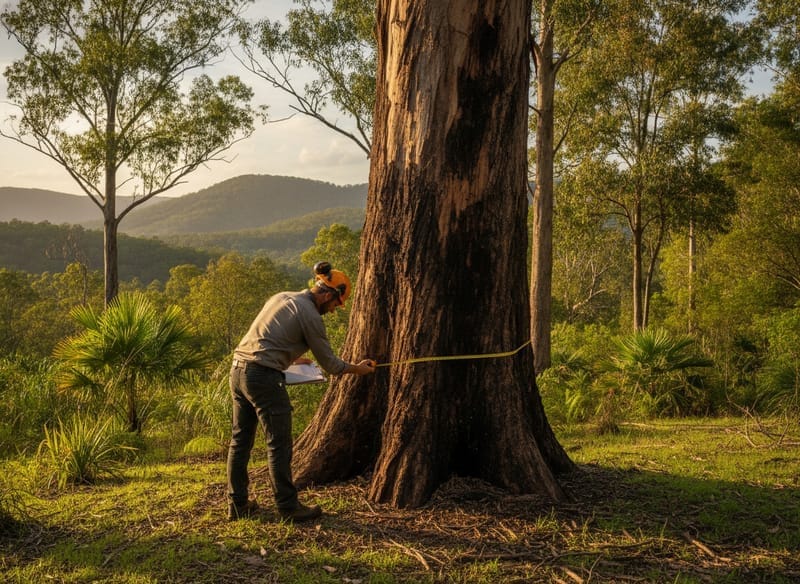
We visit your Lancefield property to assess the overgrown tree.
We explain why lopping is harmful and propose a reduction pruning or removal strategy.
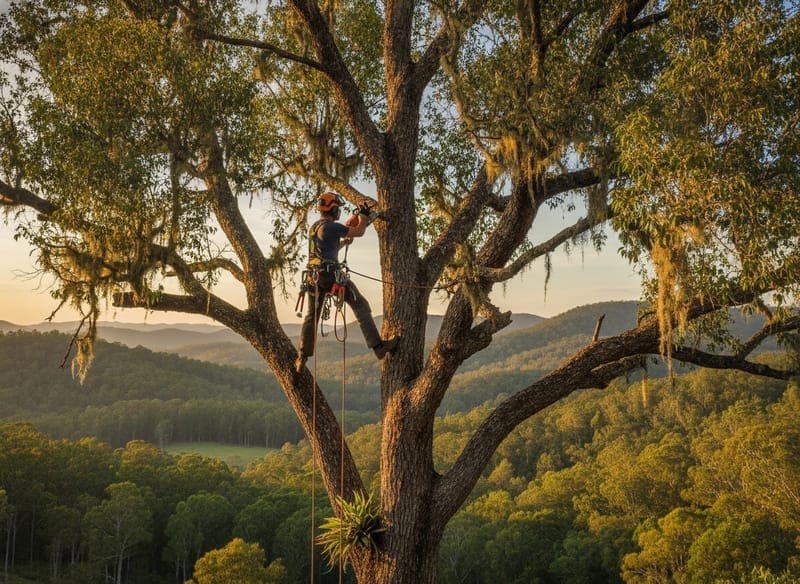
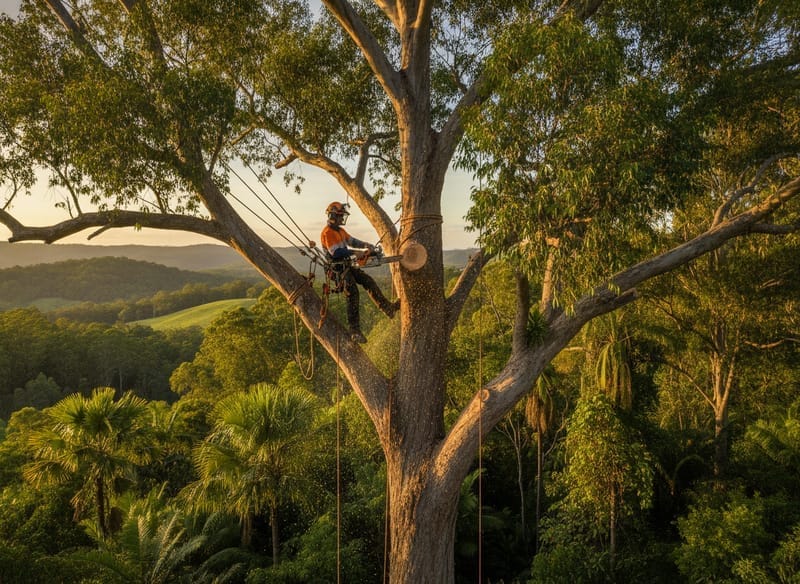
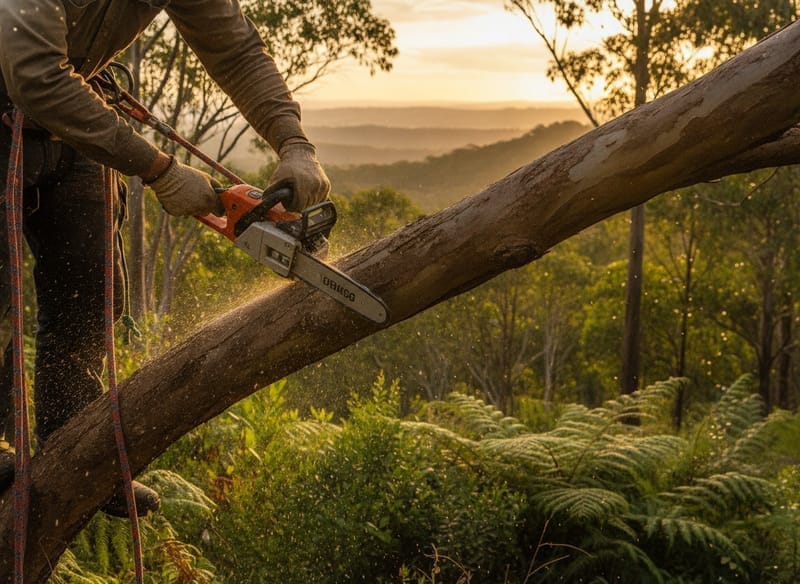
Our climbers perform precise cuts to AS4373 standards to reduce the canopy safely.
We chip the branches and leave your yard perfectly clean.
As the leading local arborists at Macedon Ranges Arborist, we know that managing large canopies on established properties requires a delicate touch. If you are looking for professional Tree Lopping Lancefield, you have likely noticed a tree on your property getting too large, overhanging your roof, or threatening fences. Homeowners and acreage managers throughout Lancefield and the wider Macedon Ranges frequently ask us to "lop" their trees to make them smaller or safer.
We understand the intent: you want the height reduced or the heavy lateral weight managed before the fierce spring windstorms hit. However, blunt topping cuts can ruin a tree's structure. Instead, our qualified climbing arborists deliver strategic, AS4373-compliant canopy reductions.
Whether you are dealing with a sprawling Manna Gum on a large rural block or an aging English Oak near your driveway, we provide the heavy canopy management you need, ensuring your trees remain safe, structurally sound, and perfectly scaled for your property.
When homeowners request tree lopping, they usually mean they want a tree reduced in size. Unfortunately, uncertified operators often interpret this literally by "heading back" or "topping" the tree—indiscriminately hacking branches mid-stem. This outdated practice creates massive wounds that the tree cannot compartmentalise, inviting rapid fungal decay and rot. Worse still, the tree's survival response is to push out epicormic shoots (water sprouts). These new branches grow furiously fast from the outer layer of the bark rather than the core wood, making them inherently weak. Within a few years, a topped tree becomes a severe hazard, especially during our notorious Macedon Ranges windstorms. The solution is professional arboriculture. As your local AQF Level 3 climbing arborists, we address your size and clearance concerns using techniques compliant with the AS4373 Pruning of Amenity Trees standard. Instead of lopping, we perform target pruning, cutting back to appropriate branch collars or lateral growth points. This reduces the canopy spread and wind sail effect, removes the immediate risk to your home, and preserves the structural integrity of the tree without triggering dangerous, weak regrowth.
When you ask us to "lop" a tree, we use these AS4373-compliant techniques to achieve the size reduction and clearance you need safely and effectively.
The horticultural alternative to old-school topping. We selectively prune branches back to a suitable lateral branch, reducing the overall height and spread of the tree. We strictly adhere to the AS4373 guideline of removing no more than 25-30% of the live foliage in a single season to prevent dieback and stress.
Often requested when low-hanging branches interfere with driveways, sheds, or pedestrian access. We remove the lowest branches back to the trunk collar, creating clear space beneath the canopy while maintaining the tree's upper structure.
To reduce wind resistance and the risk of storm damage during Macedon Ranges squalls, we selectively remove secondary branches throughout the crown. This lets wind and light pass through easily, reducing the structural load without altering the tree's natural shape.
Instead of indiscriminately lopping an entire side of a tree, we target the specific risks. We safely dismantle dead, diseased, or rubbing limbs, including hanging 'widow-makers' typical in aging Messmate Stringybark and Candlebark trees.
When branches encroach on your home, powerlines, or neighbour's fence line, we perform targeted selective pruning. We direct the tree's future growth away from your assets using precise collar cuts.
Managing oversized trees requires careful planning and flawless execution. Here is exactly how we handle your tree reduction requirements from start to finish.
- Step 1: On-Site Assessment and Consultation We visit your Lancefield property to inspect the overgrown tree. We discuss what you want to achieve—whether it's clearing a roofline or dropping the height—and advise on the best AS4373-compliant method to get that result without destroying the tree.
- Step 2: Quotation and Council Check You receive a detailed, transparent quote outlining the exact pruning methods. We also verify if your property falls under the Macedon Ranges Planning Scheme overlays (such as the Vegetation Protection Overlay or Environmental Significance Overlay) and advise if a permit is required before any major canopy reduction.
- Step 3: Access and Canopy Management On the scheduled day, our crew arrives with the right equipment. Depending on access, we use an Elevating Work Platform (EWP) or our AQF Level 3 climbers utilize advanced double-rope techniques. We carefully piece down the overextended limbs, using heavy-duty rigging to lower large timber safely to the ground without damaging your garden or infrastructure.
- Step 4: Cleanup and Chipping We process all branches through our high-capacity wood chippers. You can choose to keep the high-quality mulch for your garden, or we can haul it away in our tipper trucks, leaving your site immaculate and your tree looking structurally sound.
Every cut our team makes is guided by the AS4373 - Pruning of Amenity Trees standard. We outright refuse to perform damaging topping cuts because our duty of care is to leave your property safer than we found it. Our crew consists of AQF Level 3 certified climbing arborists, equipped with top-handle climbing saws, reliable rigging gear, and modern EWPs for safe access.
Safety and peace of mind are non-negotiable. Macedon Ranges Arborist operates fully insured with comprehensive Public Liability and WorkCover insurance. Whether we are conducting rope-access work on a steep slope or using elevated work platforms on flat acreage, we manage all risks meticulously, ensuring your home, fences, and family are completely protected throughout the job.
Lancefield transitions from flat farming plains to the undulating volcanic country of the Cobaw Ranges. This environment means we deal with both massive, wind-exposed farm trees and tightly packed residential canopies. We frequently manage heavy native canopies, including Swamp Gums, Manna Gums, and Narrow-leaf Peppermints, which are notorious for dropping limbs if poorly lopped or left to overextend.
The cool temperate climate and fierce winter windstorms make proactive canopy reduction critical. Furthermore, the Macedon Ranges Shire Council strictly regulates vegetation. While pruning for safety and clearance is essential, major canopy removal might trigger the Vegetation Protection Overlay (VPO) or Environmental Significance Overlay (ESO).
Our deep understanding of Clause 52.17 and local bushfire overlays means we can guide you on what pruning is exempt, ensuring your property remains compliant, fire-safe, and storm-ready without risking heavy council fines.
After our team completes a professional canopy reduction, the tree will need time to adjust to its new shape and foliage volume. Because we use proper branch collar cuts rather than blunt lopping, the tree will naturally compartmentalise the wounds, reducing the risk of rot.
We recommend keeping the root zone well-watered during the summer months, especially for old exotic species recovering from drought stress. We can also leave the processed mulch on-site for you to spread over the Structural Root Zone, which helps retain soil moisture. Monitor the tree during the next major spring windstorm, and plan to have us return every 3 to 5 years for formative pruning to maintain the required clearances.
Costs depend on whether we are pruning for height reduction or removing the tree entirely.
We provide a clear, fixed-price quote to manage your overgrown trees safely.
Educating and servicing the Macedon Ranges with proper tree care.
Contact our experts for safe reduction or removal.
Get a Free Quote