Reduced Hazard
Proper reduction lowers the risk of limb failure without compromising the tree.
Looking to reduce the height of an overgrown tree? We provide safe, arborist-approved alternatives to destructive lopping.
Providing expert canopy management across Mount Macedon.
While many search for tree lopping Mount Macedon, the industry standard is selective crown reduction to manage size safely.
In high-wind areas like Mount Macedon, lopping creates a dense, weakly attached outer canopy that acts like a sail, increasing the risk of storm failure. We prune for wind permeability.
Proper reduction lowers the risk of limb failure without compromising the tree.
Maintain the natural shape of the tree rather than leaving ugly, bare stumps.
Ensure your trees live on to provide shade and habitat.
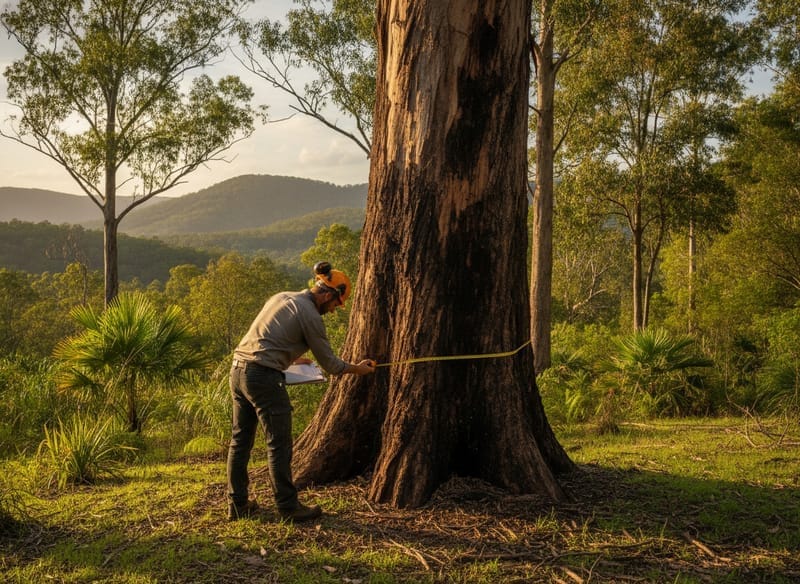
We evaluate the overgrown tree and discuss your clearance or height goals.
We explain the difference between lopping and proper reduction, or suggest removal if necessary.
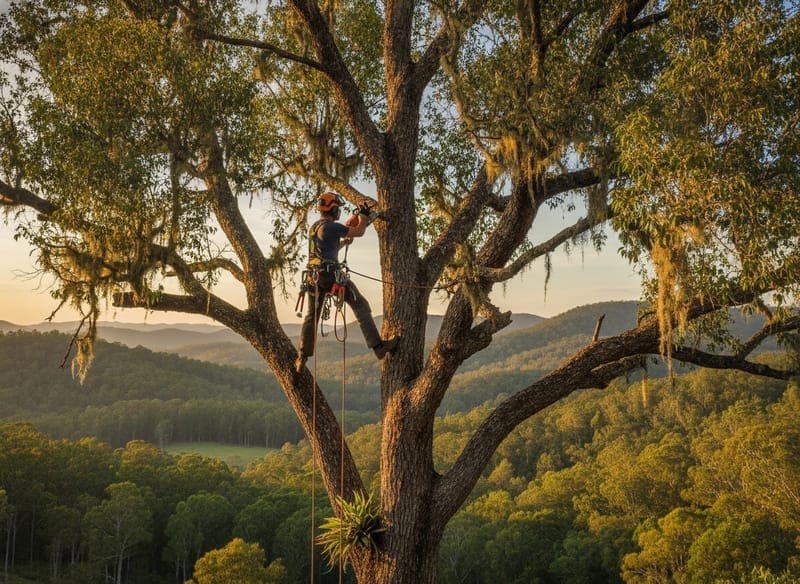
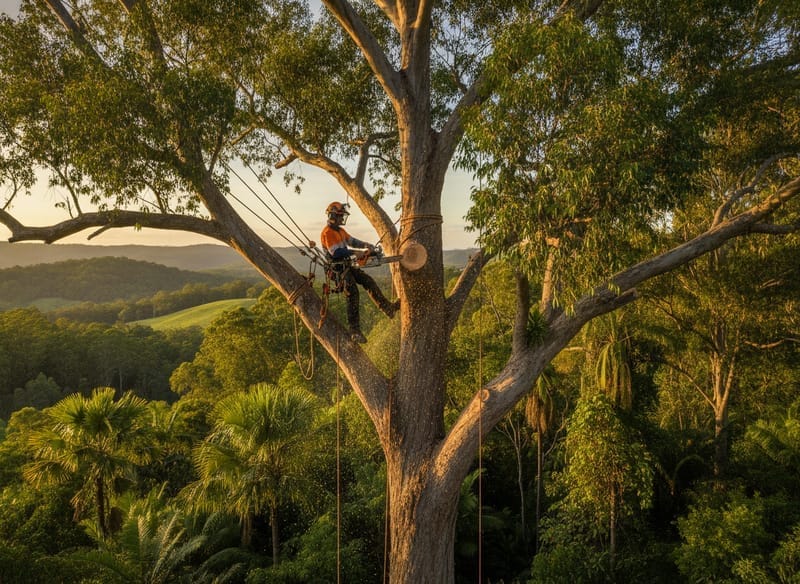
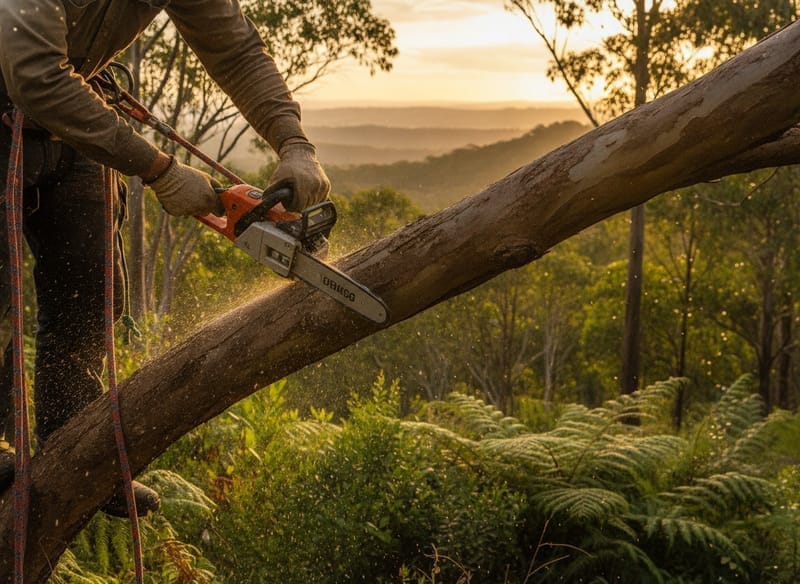
Our climbers reduce the canopy to appropriate growth points.
We chip all removed branches and tidy your property.
When it comes to managing the sprawling canopies on your property, finding reliable Tree Lopping Mount Macedon residents can trust is absolutely essential. At Macedon Ranges Arborist, we understand that whether you are managing historic English Oaks and Dutch Elms on a terraced hill station garden, or towering native Messmate Stringybarks bordering your home, sometimes trees simply get too big for their location.
Property owners, developers, and acreage managers often call our team asking for tree lopping to reduce the height or spread of an imposing tree. We are highly experienced local arborists who listen to your property goals, assess the structural health of your trees, and apply industry-best practices to achieve the exact outcome you want safely.
Living in this region means dealing with steep forested slopes, long private driveways, and severe exposure to fierce winter and spring windstorms. Managing your canopy is an ongoing necessity, not just a cosmetic luxury. We provide targeted canopy reduction and weight management strategies that protect your home, meet your practical needs, and ensure your large trees remain structurally sound and well-proportioned for years to come.
In the horticultural world, traditional "lopping" or "topping" involves indiscriminate, flat cuts across branches that leave large stubs. While this might seem like a quick, cheap way to shrink a massive Candlebark or Manna Gum, it is highly discouraged under the Australian Standard (AS4373) for very good reasons. Indiscriminate topping triggers weak, rapid epicormic regrowth, accelerates internal decay, and leaves your tree significantly more prone to catastrophic structural failure during our next heavy windstorm. However, we know that when you ask us for tree lopping, you are not asking for bad arboriculture—you simply want a tree made smaller, safer, or more manageable. That is exactly what our team delivers, but we execute it the right way. Our qualified climbers use targeted, AS4373-compliant techniques like crown reduction and selective pruning to achieve the heavy size reduction you need without destroying the tree's health. By making careful cuts at the branch collar, we promote proper compartmentalisation and healing while maintaining the natural, stable shape of the canopy. This professional approach means you get a safer, smaller tree that requires much less ongoing maintenance, ensuring your landscape investment stands the test of time.
When you need a tree's size reduced or its canopy managed, our arborists employ specific AS4373-compliant techniques rather than harmful topping cuts. Here is how we achieve your practical goals while keeping the tree safe:
This is the correct arborist alternative to topping. We use targeted drop-crotch pruning to decrease the overall height and spread of the tree. This technique is ideal for large historic exotics outgrowing their space, reducing the canopy by up to 25% while maintaining structural integrity.
We carefully remove the lower branches of the canopy to create necessary vertical clearance. This is highly requested for clearing long private driveways, local roads, and outbuildings without unbalancing the upper crown of the tree.
By selectively removing secondary branches throughout the canopy, we significantly reduce the wind resistance of the tree. This is a vital service for large natives exposed to Mount Macedon's severe spring windstorms, and it allows much-needed light into established terraced gardens below.
Targeted removal of specific problematic limbs that overhang rooflines, powerlines, or structural assets. We ensure your home is protected from falling debris while preserving the remaining healthy structure of the tree.
Following severe storm damage or partial limb failure, we provide rapid height and weight reduction. We safely dismantle hazardous sections of a damaged tree before they cause further property damage, using advanced rigging to lower heavy wood safely.
From your initial enquiry to the final sweep of your driveway, our team ensures a seamless, professional experience tailored specifically to the challenging Macedon Ranges environment.
First, we conduct a thorough on-site assessment. We inspect the tree species, its structural health, and the surrounding terrain. Whether we are dealing with a giant sequoia in a tight historic garden or a Swamp Gum in a steep, inaccessible gully, we determine the safest access method. Our crews are equipped for single-rope and double-rope access climbing, and utilise spider lifts or elevating work platforms (EWPs) where the ground permits.
Next, we discuss your goals and review any potential Macedon Ranges Shire Council overlay triggers. If an arborist report is required for a planning permit, our AQF Level 5 consulting arborist can provide the necessary documentation. Once approved, our climbers get to work. We execute precise, standard-compliant cuts to safely reduce the canopy, lowering heavy limbs carefully using specialised friction rigging to protect your gardens, retaining walls, and property below.
Finally, we process all the removed material. Our high-capacity wood chippers turn branches into valuable mulch right on site, and our tipper trucks haul away the larger logs. We rake and blow down the site, leaving your property clean, tidy, and significantly safer.
Tree canopy work at height carries significant risk, especially on Mount Macedon’s steep, difficult-access terrain. Our team strictly adheres to AS4373 guidelines for the pruning of amenity trees, ensuring every cut promotes tree health rather than decay.
We are a fully insured operation, carrying comprehensive Public Liability and WorkCover policies for your peace of mind. Our on-site crews hold AQF Level 3 in Arboriculture, alongside required tickets for Working at Heights, EWP operation, and advanced chainsaw tree felling. For complex development sites or properties under tight heritage overlays, our AQF Level 5 consulting arborist provides the necessary risk assessments and AS4970 tree protection plans required by the local council.
Executing professional Tree Lopping Mount Macedon wide requires a deep understanding of local council regulations. The Macedon Ranges Planning Scheme strictly controls canopy alterations. Depending on your location, your title may be governed by a Vegetation Protection Overlay (VPO) or an Environmental Significance Overlay (ESO), both of which typically require a permit to lop or destroy vegetation, catching both planted exotics and native species.
Historic hill station estates often fall under a Heritage Overlay (HO), requiring careful consideration of significant planted trees like cedars and oaks. Additionally, native clearing on properties larger than 0.4 hectares is regulated by Clause 52.17.
However, hazard reduction is a critical reality in this bushfire-prone region. Under the Bushfire Management Overlay (BMO), creating a defendable space around your home is essential. Clause 52.12 provides specific exemptions for bushfire protection, allowing canopy separation and clearing near older dwellings to manage fuel loads safely ahead of the Fire Danger Period. We help you navigate these rules to ensure your canopy reduction is entirely lawful.
After a significant canopy reduction, your trees will need some time to adjust. During the summer drought stress typical of the Macedon Ranges, we highly recommend deep watering of the root zone. This helps the tree recover from the pruning event and prevents dieback, particularly in older exotic species. Monitor the tree over the next 12 months. If you notice excessive epicormic sprouting—a flush of small, weak shoots along the trunk—or any unusual fungal growth around the pruning cuts, give our team a call. We recommend a follow-up inspection every two to three years, or following heavy spring windstorms, to ensure the remaining canopy remains structurally sound and your property remains safe.
Pricing for canopy reduction depends on the tree's size and the complexity of the work.
Contact us for a free quote on healthy canopy management.
Managing trees safely in your area.
Choose the arborist-approved method in Mount Macedon.
Get a Free Quote