Restore Order
Quickly transform a chaotic, debris-filled yard back into a neat, usable space.
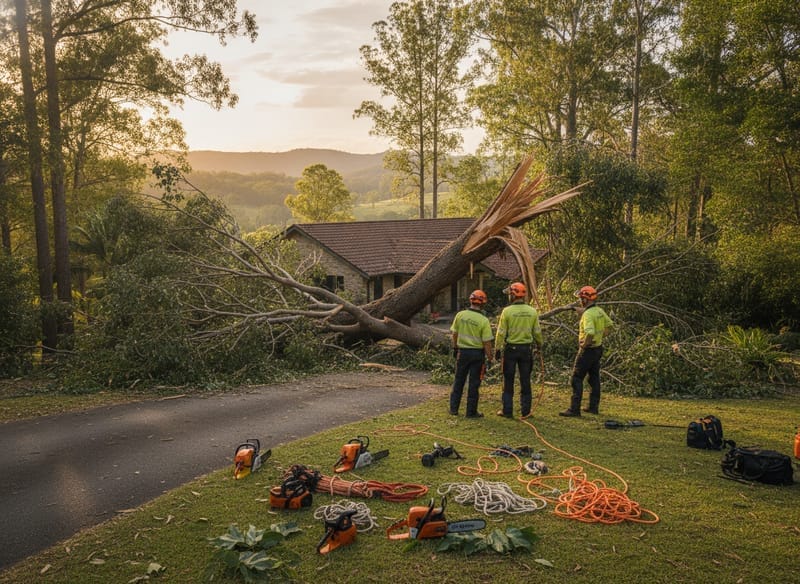
Fast, comprehensive cleanup of fallen limbs, uprooted trees, and storm debris across your Newham property.
Professional storm cleanup across Newham and the Macedon Ranges
Our Storm Damage Tree Removal Newham service is designed for the extensive cleanups required after severe windstorms or heavy snowfall events.
High winds whistling across the volcanic plains and down from the Cobaw Ranges frequently snap large branches off Newham's mature eucalypts. We specialize in post-gale cleanups, restoring safety to acreage and residential blocks alike.
Quickly transform a chaotic, debris-filled yard back into a neat, usable space.
Proactively remove torn or split limbs before they drop unexpectedly in calm weather.
We do all the heavy lifting, chainsawing, and chipping so you don't have to.
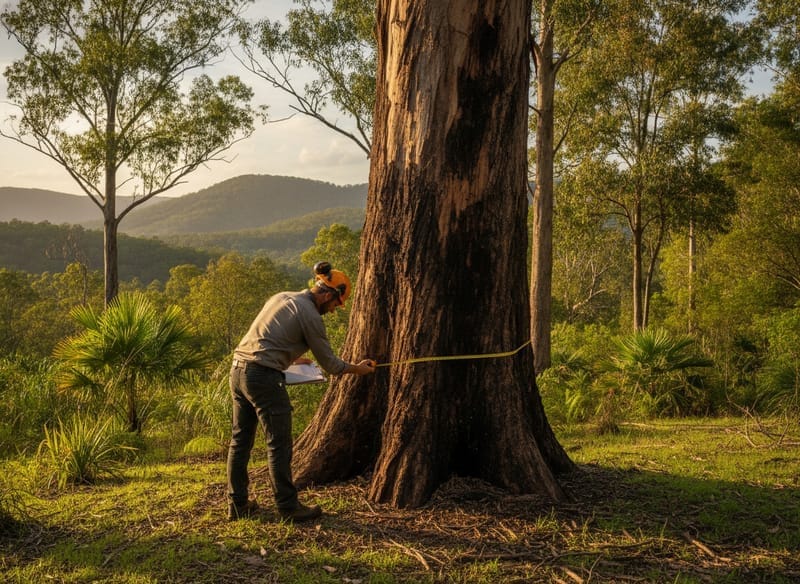
We inspect your property to locate all storm debris and identify any lingering hazards in the canopy.
We provide a clear quote for the full cleanup and processing of the damaged timber.
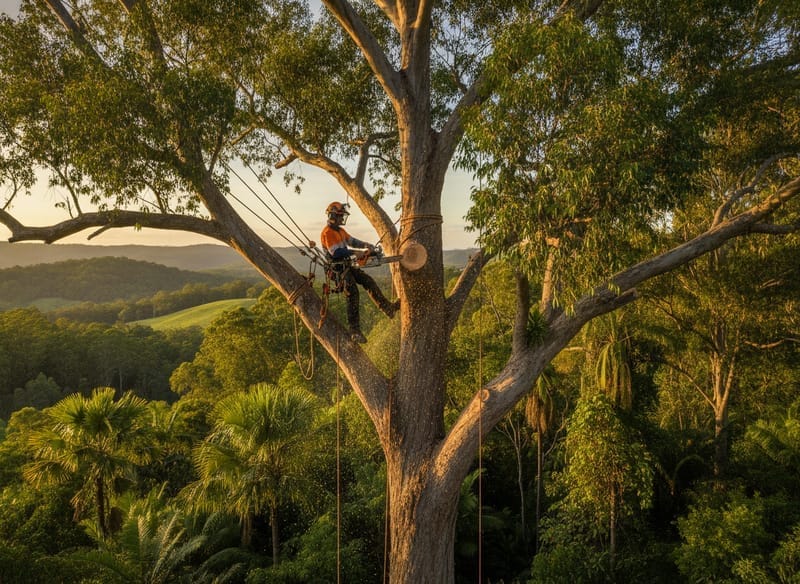
Climbers carefully dismantle cracked or hanging branches from the standing trees.
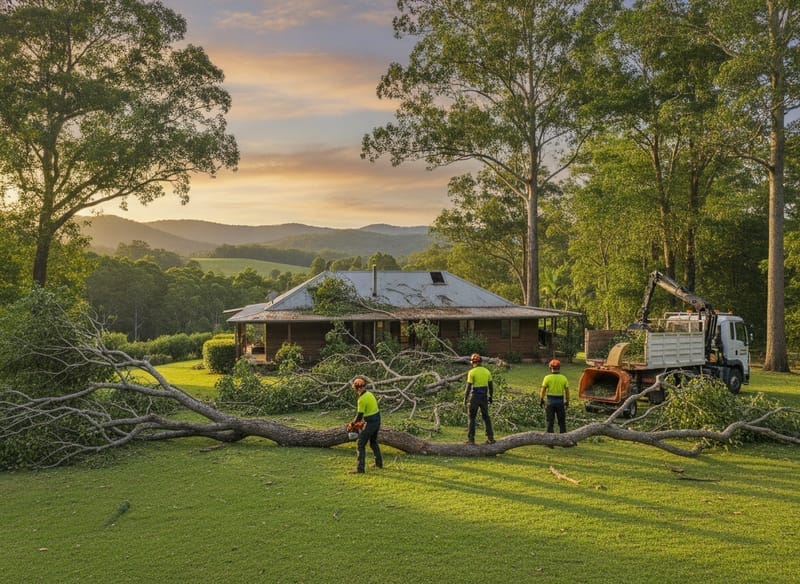
All fallen branches and logs are chipped, mulched, or removed, leaving your Newham property clean.
When severe winter and spring windstorms tear through the Macedon Ranges, local properties can be left dealing with devastating and unpredictable tree failures. When you are faced with hazardous fallen timber, our rapid-response Storm Damage Tree Removal Newham service is ready to secure your property. We are a dedicated local arborist team equipped to handle complex emergency tree work safely and efficiently. Whether you are on an undulating acreage block, a steeper hinterland site, or managing an established residential garden, storm-damaged timber presents an immediate risk to your family, access tracks, and powerlines. Large local natives like Manna Gums and Messmate Stringybarks are prone to dropping heavy limbs under extreme wind loading, while saturated winter soils frequently cause massive root-plate failures. We quickly assess the damage, isolate the risks, and deploy the right machinery to clear the site so you can get back to normal.
Cleaning up after a violent storm is vastly different from standard tree removal. Fallen, uprooted, or partially collapsed trees are highly unpredictable. Trunks and limbs are often pinned under immense pressure, creating severe tension and compression forces within the wood. If you attempt a DIY chainsaw cut without understanding these hidden forces, the timber can violently snap back—a lethal hazard commonly known as "barber-chairing."
Under-qualified operators also pose a massive risk to your property. Unlicensed "loppers" who lack AQF Level 3 arboriculture qualifications often fail to identify secondary hazards like hung-up limbs high in the canopy. Furthermore, a heavy-handed approach to standing trees that survived the storm often results in reckless "topping." This explicitly violates the AS4373 pruning standards, leaving your remaining trees permanently weakened and highly susceptible to future storms.
Choosing our professional Storm Damage Tree Removal Newham service guarantees a safe, calculated approach. We understand the specific structural challenges of local species, including the densely packed co-dominant stems common in regrowth since the 1983 Ash Wednesday fires. We use advanced rigging to ensure hung-up limbs are brought down safely, protecting your roof, outbuildings, and fencing.
Handling storm-damaged timber requires specialized techniques to mitigate extreme physical hazards. Our climbing arborists and ground crews deploy industry-leading methods to safely dismantle unpredictable trees without causing secondary damage.
We rapidly secure the site by isolating immediate threats hanging over houses, powerlines, and driveways. We identify heavily loaded hung-up branches and compromised root plates for priority removal before proceeding with secondary ground cleanups.
Fallen trees store massive kinetic energy. Our AQF Level 3 operators utilize specialized chainsaw techniques, such as bore cutting and stepping cuts, to safely release tension wood without the trunk unpredictably snapping or rolling.
For large exotics or mature natives that have collapsed onto structures, we deploy advanced friction devices and heavy-duty rigging. This allows us to extract heavy timber vertically and smoothly, preventing any further weight from crushing your roof.
Storms often leave standing trees with deeply fractured limbs that cannot safely support a climber's weight. We deploy EWPs and specialized spider lifts to safely access and dismantle storm-damaged canopies from the outside in.
When saturated soils cause complete windthrow, massive root plates can unexpectedly spring back into the hole once the trunk is severed. We safely secure the stump with heavy machinery or ground-anchored winches prior to making the final trunk cuts.
When you call us for emergency assistance, our primary focus is immediate safety and a smooth recovery process. We follow a strict operational workflow from the moment our trucks arrive at your Newham property, ensuring all risks are managed methodically. First, we conduct a rapid, comprehensive site assessment. We walk the property to identify life-safety hazards, such as a fractured Candlebark leaning over a driveway or a massive English Oak branch suspended above a roofline. We tape off drop zones, brief you on the exclusion areas, and determine the safest method of extraction. Next, we provide a detailed, itemised quote. Because storm damage often involves home insurance claims, our documentation is meticulous. We provide clear pre-work photographic evidence and break down the costs for make-safe work versus complete debris removal, ensuring your insurer has exactly what they need to process your claim quickly. Once the plan is approved, our highly skilled climbers and ground crew execute the removal. Using top-handle chainsaws, rigging gear, and elevated work platforms, we safely dismantle the hazards. All timber is processed on-site using high-capacity wood chippers. Finally, we conduct a thorough site cleanup with mini-loaders, leaving your property safe, accessible, and fully restored.
Storm damage operations carry inherent risks, which is why strict safety compliance is non-negotiable for our team. All complex felling and high-angle rigging operations are executed by AQF Level 3 qualified climbing arborists. If a damaged tree can be saved, we strictly adhere to the AS4373 Pruning of Amenity Trees standard to encourage stable, healthy regrowth.
We are fully public liability insured and carry comprehensive WorkCover for our entire crew. If storm damage impacts a future build site, our AQF Level 5 consulting arborists can provide detailed tree protection plans that comply with AS4970 Protection of Trees on Development Sites, ensuring your project moves forward smoothly.
Working in Newham and the broader Macedon Ranges involves distinct local challenges. Our cool temperate to montane climate brings severe winter frosts and fierce spring gales. These conditions routinely stress and damage large, heavy-crowned exotics like Dutch Elms as well as towering local natives like Swamp Gums and Narrow-leaf Peppermints. Before firing up a chainsaw, we navigate the Macedon Ranges Planning Scheme. While vegetation posing an immediate risk of injury or damage is generally exempt, this exemption applies strictly to the hazardous part of the tree. Complete removal of a damaged but standing native may still trigger a permit under the Vegetation Protection Overlay (VPO) or Environmental Significance Overlay (ESO). Our team understands these local overlays intimately. We can rapidly determine if your storm cleanup falls under a permitted exemption, requires council approval, or can be managed under Clause 52.12 Bushfire Protection Exemptions to maintain your defendable space.
After we complete your storm damage cleanup, it is vital to monitor the remaining trees on your acreage. Extreme winds cause microscopic internal fractures that may not fail. Over the following months, watch for new cracks in trunks, heaving soil at the base of large trees, or sudden canopy dieback. If we have performed restorative pruning on a damaged tree, monitor it for epicormic shoots. These fast-growing, weakly attached sprouts are a sign of stress. Before the next spring storm season, book our team for a proactive hazard assessment. We can selectively thin dense canopies and remove deadwood, significantly reducing your risk of future storm failures.
Pricing for storm cleanup depends on the sheer volume of debris and the complexity of removing broken branches from standing trees.
We offer transparent, obligation-free quotes to help you assess your cleanup costs quickly.
We provide comprehensive storm damage recovery across the region.
Contact us today for professional, thorough storm damage cleanup.
Get a Free Quote