Restored Property
Clear your lawns, paddocks, and driveways of overwhelming storm debris.
Complete post-storm cleanup for fallen limbs, broken canopies, and uprooted trees.
Post-storm recovery services across Woodend, Gisborne, and surrounding areas.
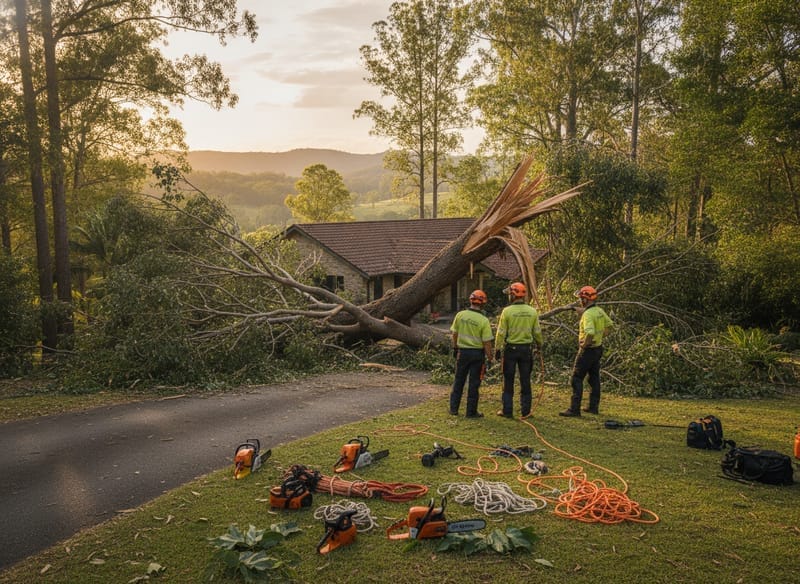
Woodend frequently experiences intense winter and spring windstorms. Our Storm Damage Tree Removal Woodend service goes beyond emergency make-safe work to provide complete site recovery. We clear massive volumes of fallen debris, assess standing trees for structural damage, and return your property to normal.
The combination of Woodend's heavy winter rainfall and high winds off the Cobaw and Macedon ranges leads to high rates of soil saturation and tree failure. We specialise in cleaning up large rural blocks that have suffered extensive canopy damage.
Clear your lawns, paddocks, and driveways of overwhelming storm debris.
Ensure damaged standing trees don't fail in the next weather event.
We take care of all the heavy lifting, chainsaw work, and chipping.
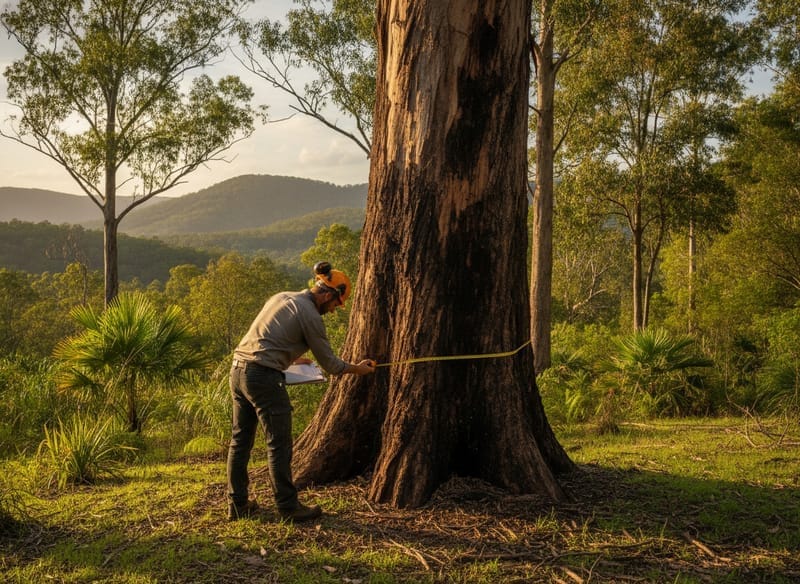
We walk your property to identify all fallen debris and hidden canopy hazards.
We tackle hung-up branches and partially uprooted trees first to ensure site safety.
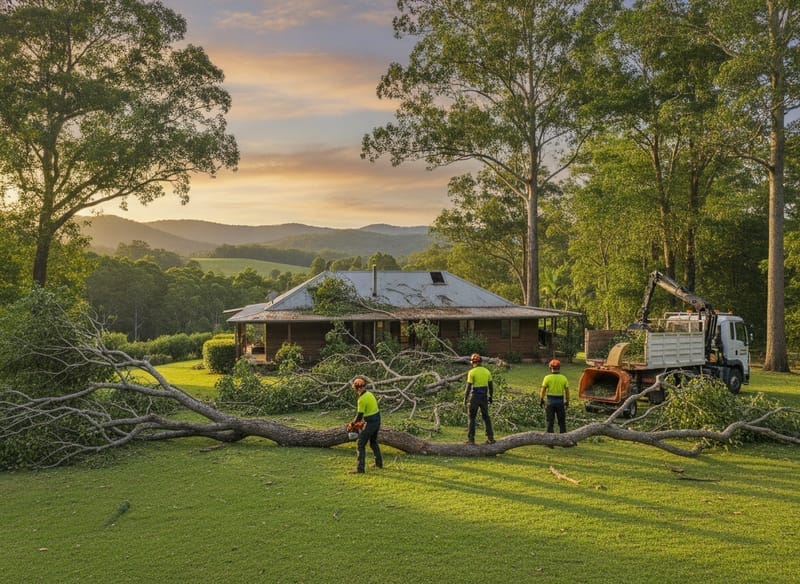
Our team uses large chippers to break down massive amounts of green waste.
We remove the logs (or stack them for firewood) and leave your grounds clear.
When severe winter and spring windstorms tear through the Macedon Ranges, large established trees can quickly transition from property assets to critical hazards. If you are facing fallen branches, uprooted root plates, or heavily leaning trunks, you need reliable Storm Damage Tree Removal Woodend. We understand the urgency of securing your property when a towering Manna Gum or a massive English Oak fails during a gale. Our local crew at Macedon Ranges Arborist provides rapid, safe, and professional make-safe and removal services across Woodend and surrounding areas like Gisborne, Macedon, and Mount Macedon. Living in this cool-temperate, montane environment means dealing with high winds, frost, and saturated soils that can easily compromise weakened trees. Whether a sudden storm has snapped a heavy limb over your driveway, or a giant Messmate Stringybark has been uprooted on a steep slope, our highly trained arborists have the heavy machinery and technical climbing skills to resolve the situation safely. We pride ourselves on delivering protecting your home, outbuildings, and critical access roads when disaster strikes.
Dealing with storm-damaged trees is incredibly hazardous and should never be treated as a weekend DIY project. When an old Dutch Elm or Candlebark comes down in a storm, the timber is often pinned under extreme, unpredictable tension and compression. Attempting untrained chainsaw work on storm debris without understanding these forces frequently leads to severe injuries, trapped equipment, or fatal kickbacks. Furthermore, partially failed trees often hide "widow-makers"—large, detached branches hung up high in the canopy that can drop instantly with a sudden gust of wind. Under-qualified operators or local handymen might offer a cheap fix, but they rarely have the insurance, AQF qualifications, or heavy-lifting equipment required to safely dismantle compromised timber. Poor practices like rough topping or dragging heavy logs can easily cause secondary damage to your roofline, fences, or remaining healthy vegetation. Our certified arborists provide a structured, AS4373-compliant solution to storm damage. We approach every site with professional triage, mitigating the immediate life-safety hazards first before executing a controlled removal or restorative prune. Using elevated work platforms, complex rope access, and loader cranes, we safely lower heavy timber away from your assets. We also supply the detailed photographic evidence and itemised arborist reports required by your insurer to help streamline your storm damage claim.
We utilize advanced arboricultural techniques, technical rigging, and specialized heavy machinery to manage hazardous storm-damaged trees across the varied terrain of the Macedon Ranges.
We conduct an immediate walk-through of your property to tag trees by priority. We secure immediate threats to houses and powerlines first, identify secondary hazards like hung-up limbs, and flag standing-but-compromised trees for further structural assessment.
For massive heritage exotics or large gums that have fallen onto structures, we utilize loader cranes and HIABs. This allows us to lift multi-ton sections of timber safely up and away from heritage homes and tight driveways without causing further impact damage.
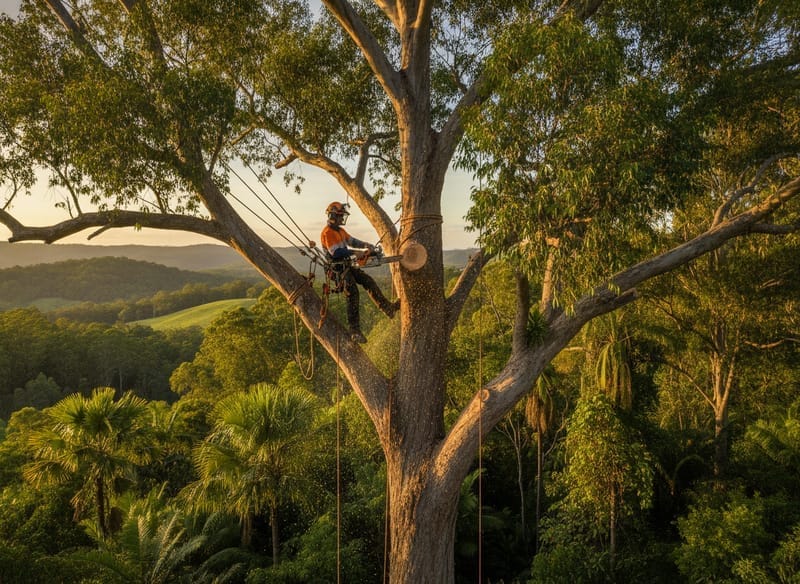
In the steep, terraced gardens and gully properties around Mount Macedon where elevating work platforms cannot reach, our climbers use Single and Double Rope Techniques (SRT/DRT) to access storm-damaged canopies and rig down broken limbs safely.
Fallen trees with exposed root plates carry lethal stored energy. Our ground operators use specialized heavy-duty ground saws (such as the MS500i or 572XP) and specific relief-cutting techniques to safely sever the trunk, allowing the root plate to fall safely back into its cavity.
We utilize high-capacity 12-inch wood chippers to process all storm debris on-site. Usable timber can be cut into firewood lengths, and branches are processed into mulch, cleared away using skid steers to leave your property completely accessible.
Responding to severe weather events requires a calm, highly structured approach. When you contact our team for storm cleanup, here is exactly how we manage the job from the initial call to full site clearance. 1. Emergency Triage and Quoting We arrive on-site promptly to assess the damage across your block. We identify immediate hazards, such as trees leaning directly on roofs or blocking primary access roads. We capture extensive before-and-after photos and provide a detailed, itemised quote designed for direct submission to your insurance company. 2. Make-Safe Operations Our absolute priority is securing your property and preventing secondary damage. Using elevated work platforms (EWPs) or specialized climbing techniques, our arborists meticulously remove suspended widow-makers and dismantle structurally failing trees that pose an immediate, life-safety threat. 3. Systematic Dismantling and Processing Once the site is made safe, we focus on the fallen or uprooted timber. Using heavy-duty chainsaws, we safely release the tension in the wood. For awkward or exceptionally heavy logs suspended over outbuildings, we bring in crane-assistance to carefully lift and lower the timber to the drop zone. 4. Total Site Cleanup We run all suitable branches through our high-capacity wood chippers. We can leave the fresh mulch for your garden or remove it entirely. Finally, we use mini-loaders to sweep and clear the site, leaving your acreage safe, tidy, and fully restored.
When undertaking hazardous emergency tree work, strict adherence to safety standards is non-negotiable. Our team is fully public liability insured and covered by WorkCover, giving you complete financial peace of mind during high-risk operations. Our climbers hold an AQF Level 3 in Arboriculture, ensuring all restorative pruning on damaged trees complies strictly with AS4373—Pruning of Amenity Trees.
For complex insurance claims or compliance disputes, our AQF Level 5 consulting arborists can provide formal tree risk assessments and comprehensive reports. We operate with strict safety protocols and hold all necessary high-risk work tickets, including Elevating Work Platform (EWP), Working at Heights, and Traffic Management for roadside emergency clearing.
Executing Storm Damage Tree Removal Woodend requires deep local knowledge of both the terrain and the regulatory environment. The Macedon Ranges is known for its historic hill station gardens and steep, forested blocks. Following severe winter gales, we frequently attend to massive fallen English Oaks, Dutch Elms, and native Messmate Stringybarks that have suffered root-plate failures in saturated volcanic soils. Tree removal here is heavily governed by the Macedon Ranges Planning Scheme. Properties often fall under a Vegetation Protection Overlay (VPO) or an Environmental Significance Overlay (ESO). Fortunately, dead or fallen vegetation posing an immediate risk of injury or damage is typically exempt from permit requirements—but strictly only for the hazardous portion. Furthermore, living in a severe bushfire risk area that remembers Ash Wednesday, managing storm-damaged timber is also critical for maintaining your defendable space under the Bushfire Management Overlay. We navigate these complex local regulations daily, ensuring all emergency clearing is fully compliant while keeping your property fire-ready.
Once the immediate storm damage has been cleared, it is crucial to monitor the remaining mature trees on your property. Severe wind events can cause hidden structural fractures, partial root tearing, or canopy stress that may not be obvious during the initial cleanup. We highly recommend scheduling an annual hazard tree assessment before the next winter storm season and prior to the summer Fire Danger Period. Look out for newly leaning trunks, ground heaving around the base of a tree, or sudden canopy dieback. If a previously damaged tree begins to sprout excessive, weakly-attached epicormic growth, contact our AQF Level 5 arborists for a structural evaluation to ensure your Woodend property remains completely safe year-round.
Storm cleanup is quoted based on the volume of debris and the complexity of removing hung-up hazards.
Reach out for a comprehensive, no-obligation quote to clean up your storm-damaged property.
We provide post-storm cleanups throughout the Macedon Ranges.
Contact our expert arborists to clear up the mess and make your Woodend property safe again.
Get a Cleanup Quote